

Fat transfer (lipofilling)
About the procedure
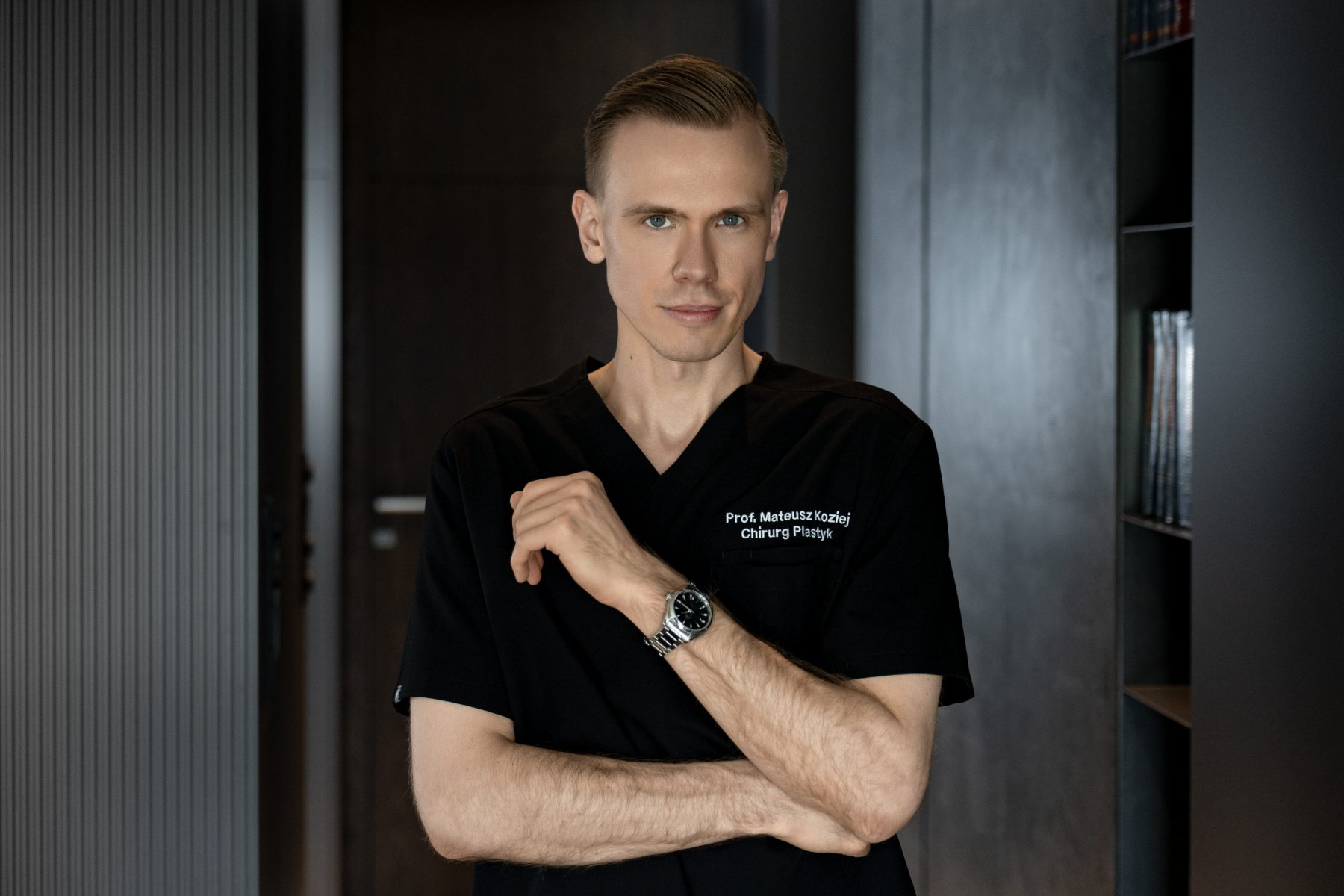
Fat transfer (lipofilling, modelling with one’s own fat) is a procedure at the intersection of plastic surgery and regenerative medicine. It involves harvesting adipose tissue from one area of the body, most commonly the abdomen, hips or thighs, purifying and preparing it, and then transplanting it to another area requiring correction or revitalisation. I perform it on the face and body.
The procedure uses autologous material, i.e. tissue derived from the patient’s own body, which reduces the risk of allergic reactions and allows the avoidance of implants and synthetic fillers. Fat contains stem cells that support tissue regeneration, so the procedure not only restores volume but also improves skin firmness and quality. The effect is twofold: fat is reduced in the donor area, while another area is simultaneously reshaped.
Indications: face
Facial modelling with fat allows for the restoration of volume deficits, e.g. in the cheek, tear trough or temple areas, and improves skin condition. This is an option for both women and men. Indications include:
- looseness and loss of facial volume associated with the ageing process, especially in the cheek area,
- wrinkles, nasolabial folds and deep grooves on the face,
- tear troughs and sagging of the facial contour,
- sunken temples and deficits in soft tissue volume,
- volume deficits in the cheek, chin or temple areas that disrupt facial proportions,
- visible signs of ageing and fatigue, and general deterioration of facial skin condition,
- irregularities after other medical procedures,
- loss of facial tissue volume caused by disease, injury or surgery,
- the need for rejuvenation without the use of synthetic fillers.
Indications: body
In the body, autologous fat transplantation is used for aesthetic and functional purposes:
- improvement of buttock shape,
- calf modelling,
- correction of asymmetry and irregularities,
- filling tissue deficits, e.g. after injuries or surgeries,
- supporting recovery after previous surgical procedures.
The procedure
Preparation
The decision to undergo the treatment is preceded by a consultation. I assess your individual case and the areas requiring correction, discuss the expected results and the potential risks associated with the procedure.
How the procedure is performed
The procedure consists of two stages. In the first stage, I harvest fat using liposuction from the donor area, most commonly the abdomen, hips or thighs. The harvested fat is then subjected to a purification process (e.g. centrifugation) and prepared for transplantation. In the second stage, I precisely implant it using thin cannulas into selected areas to improve volume, contours and proportions.
The procedure is performed under local or general anaesthesia, depending on the scope and the patient’s preferences, usually on an outpatient basis.
Facial modelling lasts from 60 to 90 minutes. I inject the fat in layers, applying each layer with consideration for the facial structure.
Aftercare
After facial modelling, mild swelling or bruising may occur, which usually subsides within a few days. Most patients return to their daily activities after about a week.
During the recovery period, I recommend:
- avoiding injury and pressure on the area treated with fat transfer for a certain period after the procedure,
- using prescribed painkillers and anti-inflammatory drugs as directed,
- avoiding smoking, which may delay healing and negatively affect the results,
- protecting the treated areas from direct sun exposure and using sunscreen,
- following hygiene recommendations, including facial hygiene for the face.
The change is visible immediately, but the final result is assessed after a few weeks, once the transplanted fat has revascularised and adapted to its new location. Partial fat resorption (up to 30% in the face) is a normal and predictable phenomenon. The effect may last for many years, and partial fat loss may require a repeat procedure. The result depends on the patient’s individual anatomical features and the areas treated with fat transfer.
Frequently asked questions
From which areas is fat harvested for fat transfer?
Most commonly from the abdomen, hips or thighs.
Does fat transfer require a hospital stay?
No, the procedure is usually performed on an outpatient basis, under local or general anaesthesia, depending on the scope.
Is the effect of fat transfer visible immediately?
Yes, although the final result is assessed after a few weeks, once the fat has revascularised.
How long does the effect of fat contouring last?
The result may last for many years. Partial fat loss is natural and may require repeating the procedure.